
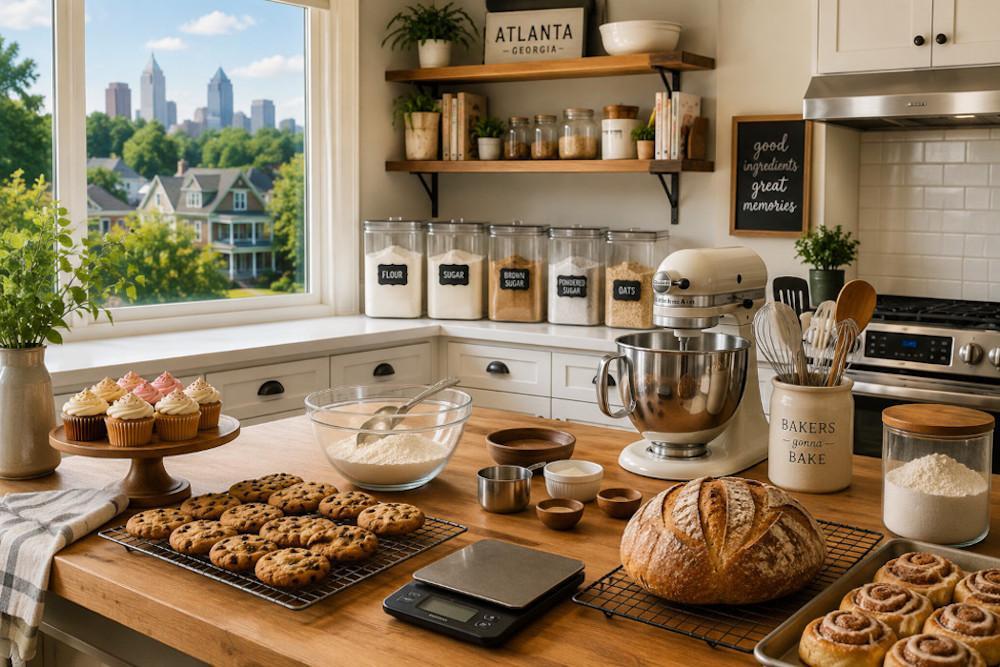
The first time I baked three dozen cookies for a neighborhood fundraiser, I quickly discovered that my biggest challenge wasn’t the recipe. It was my kitchen. Mixing bowls competed with cooling racks for counter space, ingredients were stored in different cabinets, and I spent more time walking back and forth than actually baking.
That experience completely changed how I approached my kitchen. Instead of thinking about individual appliances, I started thinking about workflow. Once everything had a dedicated place, baking became faster, less stressful, and much more enjoyable.
Whether you’re planning to sell baked goods under Georgia’s Cottage Food Program, preparing for local farmers markets, or simply baking in larger batches for family and friends, a well-designed workspace will make a bigger difference than buying expensive equipment.
Table of Contents
Key Takeaways
Start With Workflow Instead of Equipment
When people picture a home bakery, they often imagine commercial mixers, double ovens, and rows of baking supplies. While quality equipment certainly helps, none of it matters if your kitchen forces you to work inefficiently.
My first setup looked impressive, but it wasn’t practical. The mixer sat on one counter, measuring cups were stored across the room, and cooling racks ended up wherever there was space. Every recipe involved unnecessary trips across the kitchen.
The biggest improvement came after organizing the room around the order I actually worked.
Today, my baking routine flows through four simple stations:
Each area naturally leads to the next, reducing wasted movement and making large baking sessions much easier to manage.
Before purchasing another appliance, spend a few baking sessions paying attention to where you stop, turn around, or search for tools. Those small interruptions often reveal opportunities to improve your layout without spending a dollar.
If you notice your oven, mixer, or refrigerator isn’t performing as reliably as it used to, address those issues before redesigning your workspace. Faulty appliances can slow production and affect baking consistency, so scheduling Appliance EMT for fast appliance repair in Atlanta can help restore your kitchen’s efficiency without the expense of replacing equipment.
Build a Prep Station That Makes Baking Easier
The prep area is where every recipe begins, so it deserves the largest uninterrupted section of countertop.
I keep my digital scale, measuring tools, mixing bowls, and frequently used ingredients within arm’s reach. Flour, sugar, baking powder, vanilla, and spices all stay beside the prep counter instead of being scattered throughout the kitchen. That simple change eliminated dozens of unnecessary trips during larger baking projects.
Natural light is another feature that’s easy to overlook. Decorating cookies, checking frosting colors, or inspecting baked goods becomes much easier when your workspace is well lit. If your kitchen doesn’t receive much daylight, bright overhead task lighting can make a noticeable difference.
A productive prep station should include:
The goal is to keep everything you use regularly within easy reach so you can stay focused on baking instead of searching for supplies.
Efficient kitchens are built around smart design, not just expensive appliances. Many of the same layout concepts apply whether you’re planning an indoor baking space or exploring ideas for a more sophisticated outdoor cooking area. Learn what separates a good outdoor kitchen from a luxury one to see how thoughtful planning can improve both functionality and aesthetics.
Create a Reliable Proofing Area
Proofing is one of the most overlooked parts of kitchen design, yet it has a major impact on bread, cinnamon rolls, pizza dough, and other yeast-based recipes.
Early on, I placed my proofing bowls near the back door because there was extra counter space. The location seemed convenient until I realized temperature swings and drafts were causing inconsistent rises. Moving the dough to a quieter corner of the kitchen immediately improved the results.
If you live in one of Atlanta’s older neighborhoods, such as Grant Park, Kirkwood, or Candler Park, pay close attention to drafts around aging windows and doors. Older homes often have uneven insulation that affects indoor temperatures throughout the day.
Choose a location away from direct air conditioning vents, exterior doors, and windows with heavy afternoon sun. A stable environment allows dough to rise more consistently and produces more predictable baking results.
Organize the Baking and Cooling Area
Once the oven is full, every minute matters.
One lesson many home bakers learn quickly is that the oven isn’t always the bottleneck. More often, it’s the lack of organized space around it.
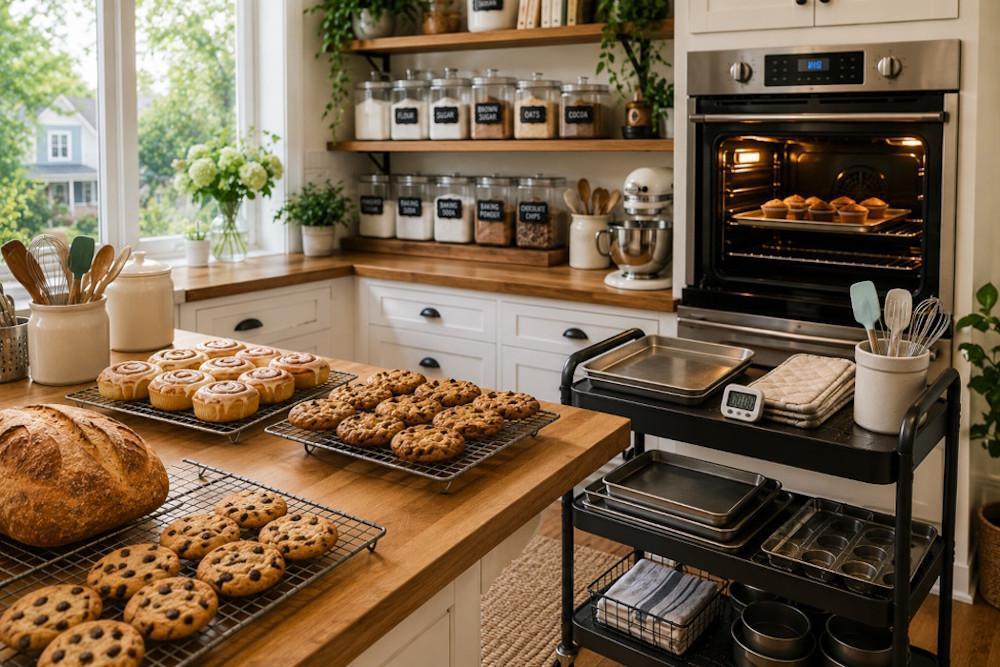
Cooling racks, sheet pans, oven mitts, timers, and spatulas should all be within easy reach. I keep my cooling racks on a rolling cart beside the oven, which frees valuable counter space while allowing fresh batches to cool immediately.
Grouping similar tools together also helps maintain momentum during busy baking days. Instead of opening multiple cabinets while timers are going off, everything I need stays within a few steps of the oven.
These small workflow improvements often increase productivity far more than purchasing additional equipment.
Invest in Oven Performance Before Oven Size
A larger oven isn’t automatically a better oven.
Consistent temperature matters far more than capacity, especially when you’re baking cookies, cakes, or pastries that depend on even heat.
As my baking schedule became busier, I noticed subtle changes in my older oven. Cookies browned unevenly, cakes baked inconsistently, and I found myself rotating pans more often than before. An inexpensive oven thermometer confirmed the temperature was fluctuating significantly.
That simple tool helped identify the problem before it ruined customer orders.
If your oven heats evenly and maintains temperature, continue using it while improving your workspace. If you notice uneven heating, inaccurate temperatures, or longer baking times, have the oven inspected before deciding to replace it. Many issues can be resolved by repairing heating elements, thermostats, or sensors, saving you the cost of a new appliance. If you’re in the Atlanta area, scheduling a professional inspection with Appliance EMT can help identify the problem early and keep your oven performing reliably during busy baking seasons.
Even experienced home bakers regularly check oven accuracy because small temperature differences can produce dramatically different results.
Build a Storage System That Supports Bulk Baking
As your baking volume grows, storage becomes just as important as counter space. Buying ingredients in bulk can lower costs, but only if they’re organized and protected from heat and humidity.
I keep flour, sugar, cocoa powder, and other baking staples in airtight, food-safe containers on shelving beside my prep station. Each container is labeled with the purchase date so I can rotate older ingredients to the front. Packaging supplies, cake boxes, ribbons, labels, and cookie bags all have their own bins, which saves time when I’m filling orders.
A practical storage system should include:
When ingredients, tools, and packaging are stored close to where you use them, you’ll spend less time searching and more time baking.
How Atlanta’s Climate Affects Baking
Atlanta’s weather has a bigger impact on baking than many people realize. Humid summers can change dough consistency, extend proofing times, soften crisp cookies, and shorten the shelf life of ingredients that aren’t stored properly.
On especially humid days, I’ve found that bread dough often needs a little less water because the flour has already absorbed moisture from the air. Butter also softens much faster, making laminated doughs and buttercream more difficult to handle if the kitchen gets too warm.
Older homes throughout neighborhoods like Grant Park, Kirkwood, and Candler Park can present additional challenges. Limited ventilation and aging insulation often cause kitchens to heat up quickly after the oven has been running for a few hours, making both baking and decorating less comfortable.
Checking the daily forecast has become part of my baking routine. If humidity is unusually high, I adjust recipes slightly, work with chilled ingredients when needed, and keep dry goods sealed until I’m ready to use them. Those small adjustments help produce more consistent results throughout the year.
Understand Georgia’s Cottage Food Rules
If you plan to sell baked goods from home, take time to understand Georgia’s Cottage Food Program before investing heavily in your kitchen.
Georgia allows approved non-potentially hazardous foods to be prepared in a home kitchen, provided producers meet state licensing and labeling requirements. Understanding those rules early helps you design a workspace that supports your long-term goals instead of making costly changes later.
For example, think about where finished products will be packaged, where labels will be stored, and how ingredients will be separated from everyday household groceries. Even if you’re only selling occasionally at farmers markets or community events, an organized production area makes the process much smoother.
Since regulations can change, always review the latest guidance from the Georgia Department of Agriculture before selling homemade baked goods.
Frequently Asked Questions
Do I need a commercial oven for a home bakery?
Not at all. Most home bakers can produce consistent results with a dependable residential oven that heats evenly. Before investing in commercial equipment, focus on improving workflow and confirming your oven maintains an accurate temperature.
How much counter space do I need?
There’s no perfect measurement, but having one uninterrupted work surface makes a noticeable difference. If you’re running out of room, a rolling island or movable worktable can add valuable prep space without requiring a full remodel.
How does Atlanta’s humidity affect baking?
High humidity changes how flour absorbs moisture, influences yeast activity, and can soften cookies or affect frosting consistency. Storing ingredients in airtight containers and making small recipe adjustments during humid weather helps maintain reliable results.
What’s the most overlooked part of a home bakery?
Storage. Organized shelves for ingredients, packaging supplies, cooling racks, and baking tools keep your workflow moving and reduce unnecessary interruptions during busy baking sessions.
Should I repair or replace an older oven?
If the oven still performs well overall, repairing components such as heating elements, thermostats, or sensors is often more affordable than replacing the entire appliance. Diagnose the issue first before deciding on a major upgrade.
Final Thoughts
A successful home bakery kitchen isn’t defined by expensive appliances or magazine-worthy design. It’s built around a workspace that supports the way you actually bake.
Looking back, the biggest improvements in my kitchen didn’t come from buying new equipment. They came from simplifying my workflow, organizing ingredients where I use them most, and paying closer attention to oven performance. Those changes reduced stress, saved time, and made every baking session more enjoyable.
If you’re building or improving a home bakery kitchen in Atlanta, start with the fundamentals. Create a layout that minimizes unnecessary movement, plan storage around your daily routine, and account for the city’s humid climate when organizing your workspace. As your skills and business grow, your kitchen can evolve with you.
The best baking setups aren’t created overnight. They’re refined one improvement at a time, with each adjustment making the next batch a little easier than the last.