
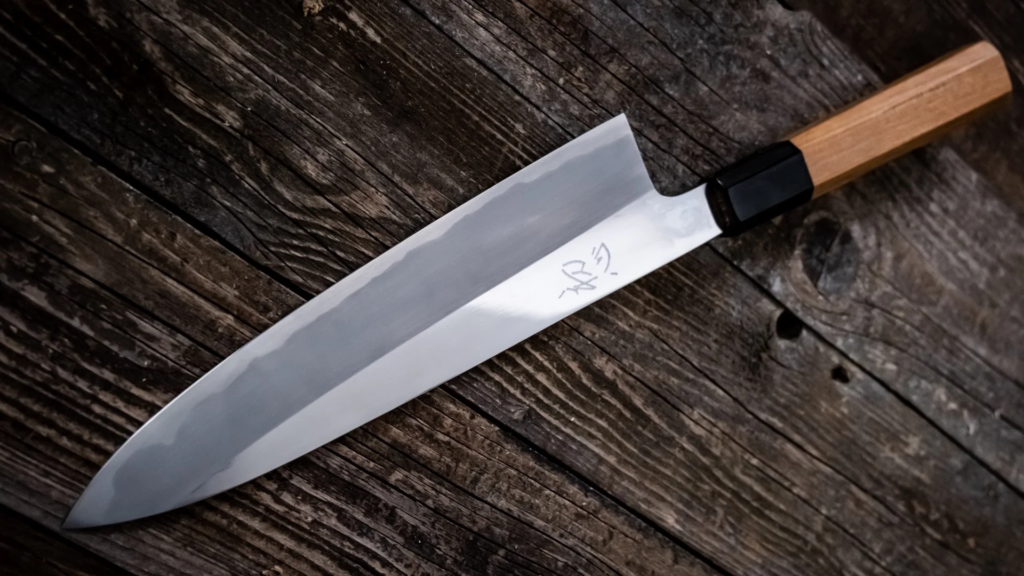
A good kitchen knife changes how cooking feels. It does not only cut ingredients. It affects speed, control, safety, texture, and the way food looks on the plate. For many home cooks and culinary professionals, buying a first Japanese knife is the point where knife choice becomes more intentional.
Japanese kitchen knives are known for thin geometry, sharp edges, precise cutting performance, and a wide range of shapes made for different tasks. That can make the first purchase feel complicated, especially when terms such as gyuto, santoku, carbon steel, stainless steel, wa-handle, and blade hardness appear at once.
The better approach is simple: start with the cooking tasks the knife must handle most often. A first Japanese knife should fit the user’s food habits, maintenance routine, cutting style, and comfort level. The right knife is not necessarily the most expensive or specialized one. It is the knife that gets used every day and performs well without creating unnecessary work.
Start with the Knife Shape
For most first-time buyers, the safest starting point is an all-purpose knife. This usually means choosing between a gyuto and a santoku.
A gyuto is the Japanese answer to the Western chef’s knife. It usually has a longer blade, a pointed tip, and enough curve for smooth slicing and rocking motions. It works well for meat, fish, vegetables, herbs, and general prep. Cooks who are used to classic chef’s knives often find Gyuto knives familiar, but lighter and more precise.
A santoku is also a general-purpose knife, but it is usually shorter and has a flatter cutting edge. Its name is often connected with “three virtues” or “three uses,” commonly understood as slicing, dicing, and mincing, or working with meat, fish, and vegetables. Many home cooks like Santoku knives because they feel controlled, balanced, and easy to use in smaller kitchens.
The practical choice depends on hand size, board space, and cutting habits. A gyuto suits cooks who want a longer, more versatile blade and often prepare larger ingredients. A santoku suits cooks who prefer a compact knife with a stable feel. Both can be excellent first Japanese knives.
More specialized shapes, such as nakiri, petty, sujihiki, deba, or yanagiba, can come later. They perform specific tasks well, but they are usually not the best first purchase unless the buyer already knows exactly what they need.
Understand Steel, Sharpness, and Maintenance
Steel is one of the biggest decisions when buying a Japanese knife. In simple terms, buyers usually choose between stainless steel and carbon steel.
Stainless steel is the easier option for most beginners. It resists rust better, needs less immediate attention after cutting acidic or wet ingredients, and fits everyday cooking routines. It still needs proper care, but it gives the user more room for error.
Carbon steel can take a very sharp edge and is often easier to sharpen. Many serious knife users like the feel and performance of carbon steel. The tradeoff is maintenance. Carbon steel can react with moisture and acidic foods, so it must be washed and dried carefully after use. Over time, it also develops a patina, which is normal, but it should not be confused with neglect or rust.
Harder Japanese steels often hold a fine edge well, but they can also be less forgiving than softer Western-style knives. This means they should not be used for bones, frozen food, hard pits, twisting cuts, or rough chopping. A Japanese knife rewards clean technique. It is made for cutting, not forcing.
Sharpening also matters. Pull-through sharpeners can remove too much metal or damage fine edges. A whetstone is usually the better long-term method, even if it takes practice. For many users, professional sharpening is a sensible option at first, while they learn how the knife behaves.
Care should stay simple:
- Wash by hand after use.
- Dry the blade immediately.
- Use wood or soft synthetic cutting boards.
- Store the knife safely in a sheath, rack, block, or magnetic holder.
- Avoid dishwashers, glass boards, bones, and frozen ingredients.
These habits protect the edge and make the knife safer to use. A sharp knife needs less force, and less force usually means better control.
How SharpEdge Shop Frames the First Japanese Knife
SharpEdge Shop presents the kitchen knife as the most basic and commonly used tool in the kitchen. In its view, the right size, shape, steel, and handle, combined with fine sharpness, can turn a knife from a simple tool into an extension of the hand.
This idea is closely connected to the Japanese expression Jinba Ittai, literally meaning “person and horse as one body.” In the kitchen, SharpEdge uses the phrase to describe a true connection between the cook and the knife. When the tool feels natural, the cook can focus less on the knife and more on the food.
That philosophy is useful for first-time buyers because it moves the question away from hype. A good first Japanese knife should not be chosen only because it looks impressive. It should feel right in the hand, match the user’s cooking, and make prep work cleaner and more controlled.
SharpEdge Shop is positioned as a destination with a selection of high-performance blades. The shop also places education at the center of the buying process, especially for food enthusiasts and serious chefs who want to understand how sharpness affects the food they prepare. A clean cut can help preserve texture, reduce crushing, and improve presentation, especially with vegetables, herbs, fish, and delicate ingredients.
For buyers comparing Japanese chef knives, the first step is to define the main use case. A cook preparing daily family meals may need a different knife from a professional working through long prep sessions. Someone who wants low maintenance may prefer stainless steel. Someone who enjoys sharpening and careful care may be ready for carbon steel. A smaller hand may feel better with a santoku or shorter gyuto, while a larger board and bigger ingredients may call for a longer blade.
The best first Japanese knife is the one that encourages better technique without making cooking feel fragile or stressful. It should be sharp, balanced, suitable for the user’s routine, and supported by proper care. When those elements come together, the knife becomes easier to trust.
That is where SharpEdge’s message of Jinba Ittai becomes practical. Less focus on the tool means more focus on the food. For anyone buying a first Japanese knife, that is the real goal: not collecting another kitchen object, but choosing a blade that makes cooking more precise, calm, and enjoyable.