
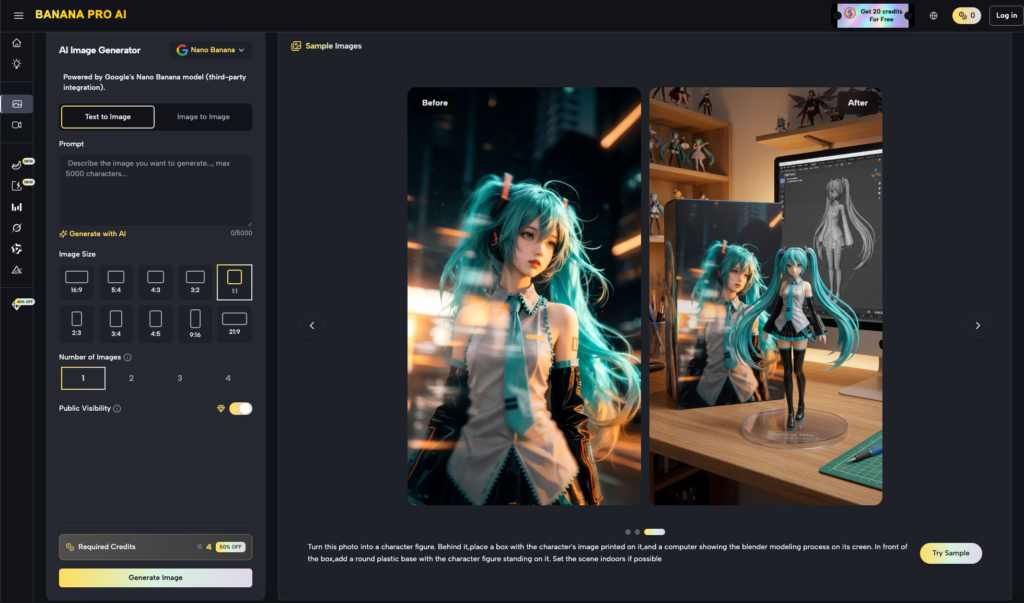
For many independent creators, the initial excitement of generating a perfect AI-generated character is often met with the immediate frustration of the second frame. You create a protagonist with specific features—a certain jawline, a unique jacket, or a particular shade of hazel eyes—only to find that in the next generation, they have aged ten years, changed ethnicities, or lost their signature clothing. This phenomenon, known as character drift, is the primary barrier preventing generative AI from moving from a “slot machine” for cool images to a viable tool for narrative storytelling.
The problem stems from how latent space works. Generative models operate on probabilities rather than stored 3D assets. When you prompt for a “man in a red coat,” the AI draws from a trillion different ways a man and a red coat can look. Without a rigorous system to anchor those variables, the model will inevitably “flicker” between different interpretations of your prompt. Solving this requires moving away from the “one-off” generation mindset and adopting a production pipeline that prioritizes subject stability above all else.
Table of Contents
The Identity Drift Problem in Generative Production
Standard text-to-image prompts are structurally incapable of maintaining fine-grained character features across different lighting and poses. If your prompt is “a detective in a dark office,” and your next prompt is “a detective running down a street,” the AI treats these as two distinct creative tasks. Even if the seed remains the same, the change in environmental context often forces the model to recalculate the character’s features to fit the new lighting or motion.
For indie makers, this “flicker effect” is especially damaging in video. If a character’s face changes slightly every few frames, the viewer’s brain detects the inconsistency as a “glitch,” breaking immersion immediately. To counter this, we need to treat the character as a fixed data point. This involves establishing a “visual anchor” before any narrative work begins. By using Banana Pro AI to lock in these features early, creators can transition from gambling on results to executing a repeatable production pipeline.
Establishing the Golden Frame as a Visual Anchor
The first step in any consistency-focused workflow is the creation of a “Golden Frame.” This is not just a high-quality image; it is a master reference set that defines the character’s geometry and color palette. Experienced operators typically generate this reference set across three primary angles: a direct headshot, a 3/4 view, and a profile view.
When building this reference in Banana AI, the key is high-descriptive prompting. Vague terms like “beautiful woman” or “handsome man” are too broad. Instead, you must hard-code physical traits into the prompt syntax: “linear scar on the left cheekbone,” “asymmetrical bob haircut with silver highlights,” or “vintage 1950s horn-rimmed glasses.” These specific, high-contrast details give the model less room to hallucinate variations.
Once you have a Master Reference that you are satisfied with, this image becomes the source for all subsequent image-to-image (i2i) operations. Starting with a static, high-fidelity image-to-image workflow is significantly more stable than jumping directly into video generation. It allows you to test the character’s “elasticity”—how much the face distorts when the prompt asks for a smile, a scream, or a look of surprise—before committing to the render time of a video sequence.
Latent Space Discipline: Prompting for Nano Banana
The Nano Banana model requires a specific prompt architecture to maintain subject identity while allowing for environmental flexibility. The most effective method is “Modular Prompting,” where you separate the ‘Subject’ from the ‘Environment’ using distinct weights or structural breaks.
For example, a disciplined prompt might look like this:
(Subject: man with thick beard, green eyes, wearing a weathered leather duster) :: (Environment: neon-lit cyberpunk street, pouring rain, cinematic lighting) :: (Technical: 8k, sharp focus).
By keeping the Subject block identical across every generation, you minimize the variance in the character’s base features. When using Nano Banana, seed locking becomes your primary tool for iteration. If you find a character you like, keeping that seed fixed while slowly modifying the environment parameters allows you to move the character through different scenes without the facial structure resetting.
It is important to note, however, that even with fixed seeds, the interaction between a character and a new light source (such as moving from a sunny park to a dimly lit basement) can cause the model to adjust skin tones or hair texture in ways that are difficult to predict. We do not yet have a “perfect” lock that survives extreme lighting shifts without some manual intervention.
Refinement Workflows: Pre-processing with an AI Photo Editor
No matter how refined your prompting is, the model will eventually hallucinate. It might add a button to a jacket that wasn’t there before or slightly change the shape of an ear. In a professional workflow, these errors must be corrected before they are fed into a video model or a final sequence.
This is where integrating an AI Photo Editor becomes essential. Rather than re-generating the entire image (which risks further drift), you should use inpainting and masking to “pin” the character’s features. If a generation is 90% perfect but the character’s eye color has shifted, you mask the eyes and re-prompt specifically for that detail.
This stage is also the best time to handle costume consistency. Generative models often struggle with complex textures—like a specific plaid pattern or a logo on a shirt. By using an AI Photo Editor to manually refine these details on your Golden Frame, and then using that refined image as a high-strength reference for future generations, you force the Banana Pro model to adhere to the established visual logic. Scaling these reference images to a higher resolution at this stage also prevents the “pixel crawl” often seen in low-resolution video outputs.

Bridging to Motion: Temporal Stability in Video Generation
Moving from a stable image to a coherent video asset is the final, and most difficult, hurdle. Within the Canvas Workflow of Banana Pro AI, the goal is to maintain the base identity established in your Master Reference. The most effective way to do this is through the Image-to-Video (i2v) pathway rather than Text-to-Video.
When you feed your “Golden Frame” into the video engine, you must carefully calibrate motion strength. High motion strength often leads to “fluidity errors” where the character’s face begins to morph or melt during fast movements. For narrative consistency, a lower motion strength—focused on subtle head tilts, eye blinks, or breathing—is often more effective.
The concept of “Scene Identity” is also vital here. You are not just locking the character; you are locking the environment. By keeping the color palette and texture of the background consistent across clips, you provide a visual anchor that makes small fluctuations in the character less noticeable to the viewer. If the background stays still and the lighting remains consistent, the human eye is much more forgiving of minor character drift.
The Practical Realities of Current AI Consistency
While the tools in the Banana Pro ecosystem have significantly reduced the friction of character creation, we must remain realistic about the current limitations of generative media. Even with the best workflows, certain elements remain highly volatile.
Complex, repeating patterns—such as a character wearing a specific pinstripe suit or a shirt with a complex floral print—are notoriously difficult to stabilize across frames. The AI often “re-interprets” the pattern with every new pose. For this reason, many experienced creators choose simpler, solid-colored clothing for their AI protagonists to minimize visual noise.
Furthermore, we are currently in a “sweet spot” for consistency that lasts between 2 to 4 seconds. Beyond that duration, the cumulative probability of a “hallucination” increases significantly. Narrative creators are currently finding the most success by stitching together these short, high-stability clips rather than attempting to generate long-form continuous takes.
Lastly, there is an inherent uncertainty in how models handle the transition between very different lighting environments. While we can prompt for consistency, the way a character looks under a harsh midday sun versus a flickering fluorescent light will always involve a degree of unpredictability. Until we have true 3D-aware latent models, the “systems approach”—rigorous reference sets, modular prompting, and manual refinement—remains the only way to achieve professional-grade narrative continuity in generative media.