
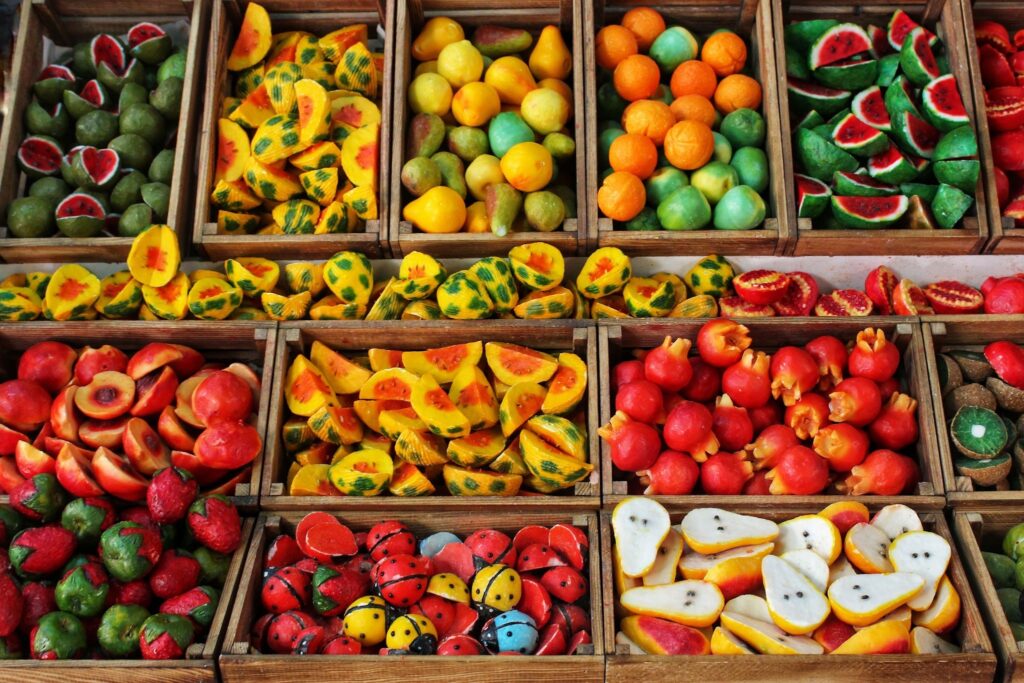
Cherries, lemons and oranges have remained part of slot-game imagery for more than a century. They began on mechanical reels with tight limits on space and color, yet they continue to appear in online games capable of detailed animation and elaborate settings.
Food imagery has survived because it is familiar, visually varied and easy to organize into a coherent theme. Digital production has allowed developers to expand basic fruit icons into bakeries, sweet shops and other food-inspired worlds.
Table of Contents
How Fruit Entered Slot Imagery
An online platform such as jackpot city shows the modern setting in which slots sit alongside table and live games. The example concerns the range of formats rather than identifying a particular food-themed title. The influential Liberty Bell machine, developed by Charles Fey around the turn of the twentieth century, established a three-reel arrangement later adopted by other manufacturers. Its icons included bells, horseshoes and card suits rather than the fruit closely associated with classic slots today.
Fruit appeared on later machines. The leading historical explanation is that some early twentieth-century devices distributed sweets or chewing gum instead of cash, with cherries, lemons, oranges and plums representing available flavors. A later US gaming patent repeats this account, describing traditional fruit symbols as remnants of machines that dispensed gum.
The surviving evidence does not trace every fruit icon to one manufacturer or product. Machine makers regularly borrowed recognizable ideas, allowing the convention to spread across different designs. From a practical design standpoint, fruit also suited a narrow reel. A lemon looked different from a cherry, required no written explanation and could be represented with few colors. Those qualities likely helped the images become part of the machine’s visual language. That recognition is especially useful on compact mobile displays, where every symbol competes for limited space and attention during play.
Digital Screens Expanded the Pantry
Casino games moved from mechanical reels towards electronic displays during the twentieth century. A slot-machine patent granted in 1988 discussed both physical reels and a video version presented on a cathode-ray tube, illustrating a period when the formats coexisted. Screens removed many of the old physical restrictions. An icon no longer had to fit on a printed reel strip. Fruit could bounce, split, or form part of a larger animated scene. Developers could also introduce sweets, cakes, biscuits, drinks and kitchen equipment.
These visuals present the game while its mathematical model and randomization system govern the results. An elaborate cake animation does not alter the probability attached to the underlying event. Food themes sometimes borrow the structure of a recipe. Ingredients may be gathered, mixed, or transformed during an animated sequence. Clear design keeps that fictional progression separate from the random process determining the result.
US-regulated internet gaming generated $10.74 billion in 2025, rising 27.6% from the previous year, according to the American Gaming Association. These figures establish the scale of one regulated online market. They do not measure demand for food themes or describe South Africa’s casino sector.
Baking Creates Ready-Made Game Worlds
A bakery already contains the pieces needed to establish a setting: ovens, mixing bowls, whisks, piping bags and display counters. Designers can use those familiar objects without devoting much screen space to explaining where the game takes place. Cookies and decorated cakes are especially adaptable. Their outlines remain recognizable on a phone, while icing, sprinkles and fillings provide variation without abandoning the central idea. A group of symbols can look related without becoming identical.
Color, contrast and visual texture require deliberate choices. Cookies for Love’s guide to tropical flavor profiles considers how presentation shapes expectations around desserts and drinks. Digital artists work with related principles, although they are producing a readable interface rather than something edible. Sound can complete the setting. The ring of a kitchen timer, the movement of a mixer, or the snap of a biscuit can reinforce an animation. Restraint remains important when the same short sequence may occur repeatedly.
Familiar Food Still Needs Clear Design
Small screens quickly expose weak visual distinctions. A strawberry, cherry and red sweet may be difficult to separate when reduced to the same size. Shape, outline and movement should therefore support color. Food references change across cultures. A pastry familiar in one country may need an explanation elsewhere, while humor based on an English food name may not survive translation. Developers can localize the reference or choose an image that communicates without extra text.
Decorations must leave rules, account information and responsible-play controls easy to find. A food setting should create atmosphere without obscuring how the game functions. Fruit icons have lasted because they remain simple and recognizable. Online technology can place them inside far more detailed settings than a mechanical reel ever allowed, but the original cherry and lemon still do their basic job at a glance. Their survival is not simply nostalgia: a small picture can establish a theme and remain understandable without explanation.