
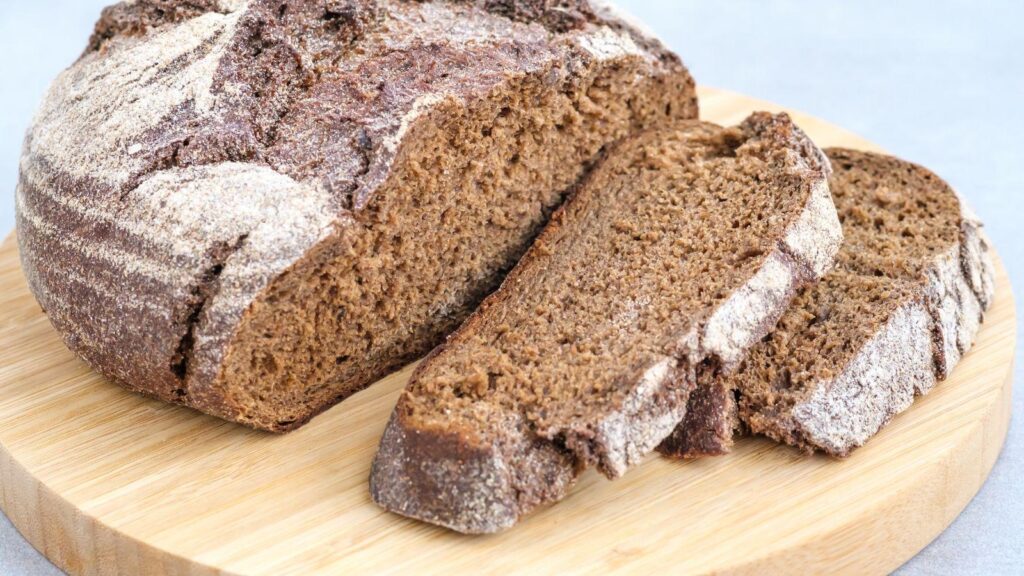
Rye has a reputation for being difficult. Dense, sticky, a little intimidating, the loaf that goes wrong.
Most of that reputation comes down to one thing: people bake rye as if it were wheat. It is not, and once you understand why, it gets a lot friendlier.
This is a plain-English look at what rye flour actually does in a dough, the main styles of rye bread, the adjustments that separate a good loaf from a gummy one, and a reliable recipe to bake your first one.
Why does rye turn out dense when wheat does not?
Table of Contents
What rye flour is really doing
Wheat bread rises tall because of gluten, the stretchy protein network that traps gas and holds its shape. Rye has some of the proteins involved, but very little glutenin, which is the one that builds real strength. So a rye dough never develops that springy, elastic feel, no matter how long you knead it.
What rye has instead is a high level of pentosans, a group of carbohydrates that soak up a huge amount of water. They are why rye dough feels sticky and tacky rather than smooth, and they do a lot of the work of holding the crumb together in place of gluten.
There is one more quirk worth knowing. Rye is rich in an enzyme called amylase, which breaks down starch. Left unchecked, it can leave the inside of the loaf gummy. The traditional fix is acidity, which is exactly why so much classic rye is made with a sourdough starter. The sour environment keeps that enzyme in check and gives you a cleaner crumb.
So rye is not fussy for the sake of it. It is a different material, and it rewards a different approach.
The main styles of rye bread
Rye is not one bread. The label covers a wide range, and knowing which one you are aiming for helps.
Light rye uses flour with most of the bran and germ removed. It bakes up softer and milder, and it is often blended with wheat flour for a lighter loaf.
Dark rye keeps more of the whole grain, so it is deeper in color, earthier, and denser.
Pumpernickel sits at the far end, a coarse whole-rye bread baked long and slow at a low temperature until it turns almost black and faintly sweet.
Marbled rye is the deli favorite, light and dark doughs rolled together into a swirl.
And then there are the hearty central European and Scandinavian loaves, close-textured, long-keeping, built for topping rather than sandwiching.
If you have only ever met rye as supermarket sandwich bread, the range is genuinely worth exploring.
The adjustments that actually matter
You do not need to relearn baking to make rye. You need to change a few expectations.
Work with wet hands and a wet bench scraper. Rye dough is meant to be sticky, and adding fistfuls of flour to fight that stickiness is the fastest way to a dry, heavy loaf.
Do not wait for a dramatic rise. Rye proofs more modestly than wheat, and pushing it too far can cause the structure to collapse. A gentle, visible puff is usually enough.
Give it a longer, gentler bake. Dense doughs need time for the middle to set, and rye holds a lot of moisture.
And here is the tip that surprises people most. Let it cool completely before you slice, ideally a full day for a proper rye. The crumb keeps setting well after the loaf leaves the oven, and cutting in too early is what gives you that damp, gummy center people blame on the recipe.
Before you bake
If you are new to rye, do not start with a dense 100% loaf. A light-to-medium rye cut with plenty of wheat flour is the forgiving entry point, and it is exactly what the recipe below is built on.
Two things to have ready: an instant-read thermometer, which takes all the guesswork out of doneness, and a little patience for two unhurried rises. Everything else is standard.
Caraway rye bread
This is a deli-style loaf, soft enough to slice cleanly, with the gentle tang and caraway flavor most people picture when they think of rye. It uses yeast rather than a sourdough starter, so there is no week of feeding a jar first, and the sour cream stands in for some of that classic rye tang while keeping the crumb moist.
It is adapted from King Arthur Baking’s caraway rye, which is about as reliable a starting point as rye gets.
Makes one large loaf, or two smaller ones.
Ingredients
For the starter batter
- 1 cup (227 g) lukewarm water
- 4 tsp (14 g) granulated sugar
- 1 cup (106 g) medium rye flour
- 2 1/4 tsp instant yeast
For the dough
- 2 1/3 cups (280 g) all-purpose flour
- 1/2 cup (113 g) sour cream or plain Greek yogurt
- 1 1/2 tsp (9 g) salt
- 1 to 2 tbsp caraway seeds, to taste
- 3 tbsp (25 g) vital wheat gluten, optional, for a higher rise
- melted butter, optional, to brush
Method
- In a large bowl, or the bowl of a stand mixer, stir the water, sugar, rye flour and yeast into a loose batter. Let it sit for 20 minutes. This gives the thirsty rye flour time to hydrate, which makes the finished dough much easier to handle.
- Add the all-purpose flour, sour cream, salt, caraway seeds, and the vital wheat gluten if using. Mix and knead into a soft, fairly smooth dough. It will stay a little tacky, which is normal for rye, so resist the urge to add much extra flour.
- Place the dough in an oiled bowl, cover, and let it rise until noticeably puffy, about 1 to 1 1/2 hours.
- Gently deflate the dough, knead it for a few seconds, and shape it into one long oval loaf, or divide it into two smaller ovals. Set it on a parchment-lined or lightly greased baking sheet.
- Cover and let rise again until puffy, about 1 to 1 1/2 hours. Toward the end of this rise, heat the oven to 350F.
- Spritz or brush the loaf with water, then slash the top about 1/2 inch deep, one long cut down the length of an oval.
- Bake at 350F for about 30 to 35 minutes, until deep golden and the internal temperature reads 190F on an instant-read thermometer.
- For a soft crust, brush the warm loaf with melted butter. Let it cool completely before slicing, rye firms up as it cools and slices far more cleanly once fully cool.
A few useful swaps
For extra tang and an even moister crumb, replace the water with dill pickle juice, an old deli trick. Cut the salt back slightly, since the juice is already salty.
The vital wheat gluten is optional, but it noticeably lifts the loaf, since rye brings so little structure of its own.
Not a caraway person? Leave the seeds out entirely. The bread still works.
Where to go from here
Once you have baked a loaf or two and rye stops feeling like a gamble, everything else opens up. A darker flour, a sourdough version, a marbled swirl for sandwiches.
And if you catch the rye habit and start wondering how cafes and bakeries turn out fresh, consistent rye every single day, Suprima’s rye bread guide covers the same loaf from the bakery side, including how they keep quality steady at volume.
Treat rye on its own terms and it stops being the loaf that goes wrong, and starts being one of the most satisfying things you can bake.