
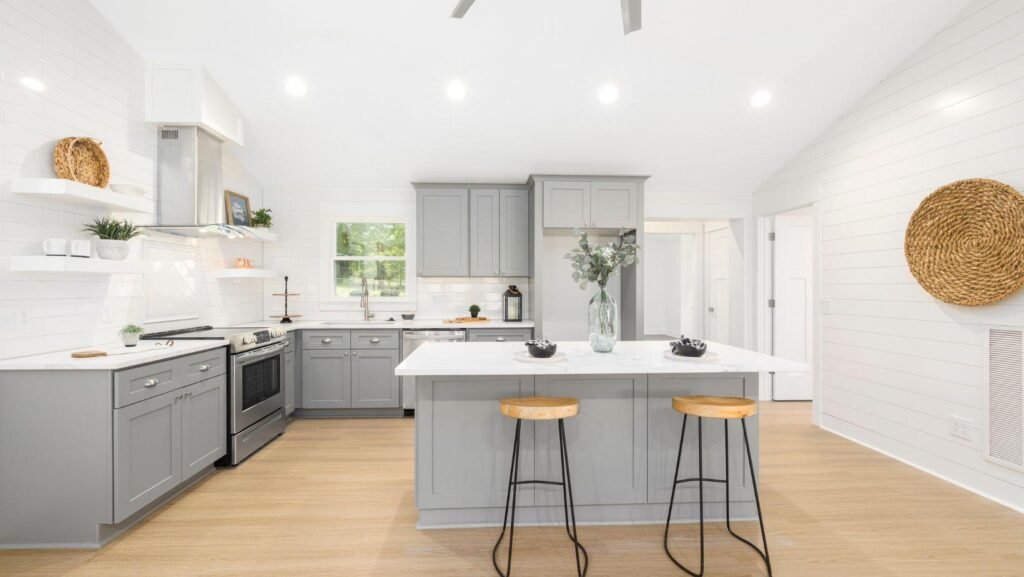
Kitchen stools used to be fairly straightforward. They sat beneath a breakfast bar, came out at mealtimes and otherwise stayed out of the way. These days, that same seat might be used for breakfast at 7am, homework at 4pm, drinks with friends at 6pm and an improvised laptop session somewhere in between. As kitchens have become more social and multifunctional, the humble stool has quietly taken on a much bigger role.
That makes choosing kitchen stools for home less about finding something that simply fits under the bench and more about thinking through comfort, height, durability and the way the space actually gets used. A stool that looks fantastic but becomes uncomfortable after fifteen minutes probably won’t feel like such a clever purchase once it starts serving as an everyday seat.
Table of Contents
The Kitchen Island Isn’t Just for Cooking Anymore
In many homes, the kitchen island has become the unofficial centre of the house. People lean against it while dinner is being prepared, children spread schoolwork across it, guests gather around it during parties and someone inevitably sits there with a coffee while pretending they’re only stopping for five minutes.
Because the island now serves so many different purposes, the seating needs to keep up. A backless stool may look beautifully minimal and tuck away neatly, but if people regularly sit there for extended periods, a supportive backrest can make a noticeable difference. Footrests matter too, especially on taller stools where dangling legs become uncomfortable very quickly.
The right choice depends on whether the stools are mainly for quick meals or whether they’re effectively replacing dining chairs for a large part of the day.
Getting the Height Wrong Is Surprisingly Easy
A stool can be beautifully designed and still feel completely wrong if the proportions don’t match the bench.
The critical measurement is the distance between the seat and the underside of the benchtop. There needs to be enough clearance for knees and comfortable movement, but not so much that the person sitting there feels unusually low. Counter-height stools and bar-height stools aren’t interchangeable, even though they can look almost identical online.
Measuring before buying sounds painfully obvious, but it’s one of those steps people often skip because they assume kitchen benches are standard. They aren’t always, particularly in renovated homes or custom kitchens. Taking a few minutes with a tape measure can prevent an expensive set of stools from feeling awkward every time someone sits down.
Comfort Doesn’t Have to Mean Bulky
There’s sometimes a trade-off in furniture between something looking streamlined and actually being pleasant to use. Kitchen stools are one area where that compromise can be avoided with a little care.
A slim-profile stool can still offer decent support if the seat is well shaped and the footrest sits at a sensible height. Upholstered seats can add softness without making the design feel heavy, while curved backs often provide more comfort than their visual simplicity suggests.
Swivel mechanisms can also make a stool easier to use in tighter spaces because people don’t need to drag the whole frame in and out every time they sit down. That may sound like a small detail, but on hard floors and in busy households, less scraping and repositioning can be a genuine advantage.
Think About What the Stools Have to Survive
Kitchen seating tends to live a harder life than many other pieces of furniture. Crumbs happen. Drinks spill. Shoes hit the footrests. Children climb up sideways despite being repeatedly asked not to, and someone will eventually lean the stool further back than the designer probably intended.
Materials therefore deserve more attention than they might in a formal dining room. Timber can bring warmth and character, while metal frames may offer a cleaner, more contemporary look. Upholstery adds comfort but needs to suit the amount of use and cleaning the stool is likely to face.
In a busy family kitchen, wipeable surfaces may be more valuable than delicate finishes. In a quieter home where the stools are mostly used for morning coffee, you may have more freedom to prioritise texture or appearance.
Leave Enough Room Between Each Seat
It’s tempting to maximise the number of stools along an island, particularly if the bench is long enough to technically accommodate them. The problem is that tightly packed seating can make everyone feel as though they’re sharing one large chair.
Elbow room matters. People need space to sit down, turn slightly and eat without constantly bumping into whoever is beside them. The width of the stools themselves also changes the calculation, because a broad upholstered design naturally needs more space than a narrow timber seat.
Fewer stools with comfortable spacing often look better too. An island lined with too many seats can become visually crowded, while a little breathing room helps the kitchen retain its sense of openness.
The Best Stool Should Fit the Room Without Disappearing Into It
Kitchen stools sit in a slightly unusual design position. They need to relate to the cabinetry, benchtop, lighting and surrounding furniture, but they can also be an opportunity to introduce something different.
A timber stool can soften a kitchen dominated by stone and painted cabinetry, while a darker frame can add definition to a very pale interior. Curved shapes can balance strong architectural lines, and upholstery can introduce colour without committing an entire room to it.
Matching everything exactly isn’t necessary. In fact, stools often look more interesting when they complement the kitchen rather than appearing to have been manufactured as part of it.
As kitchens continue to function as dining rooms, workspaces, gathering places and everyday family hubs, the stool has become much more than a spare seat beneath the counter. It’s one of the pieces people interact with constantly, which means getting the practical details right matters just as much as choosing something that looks good.